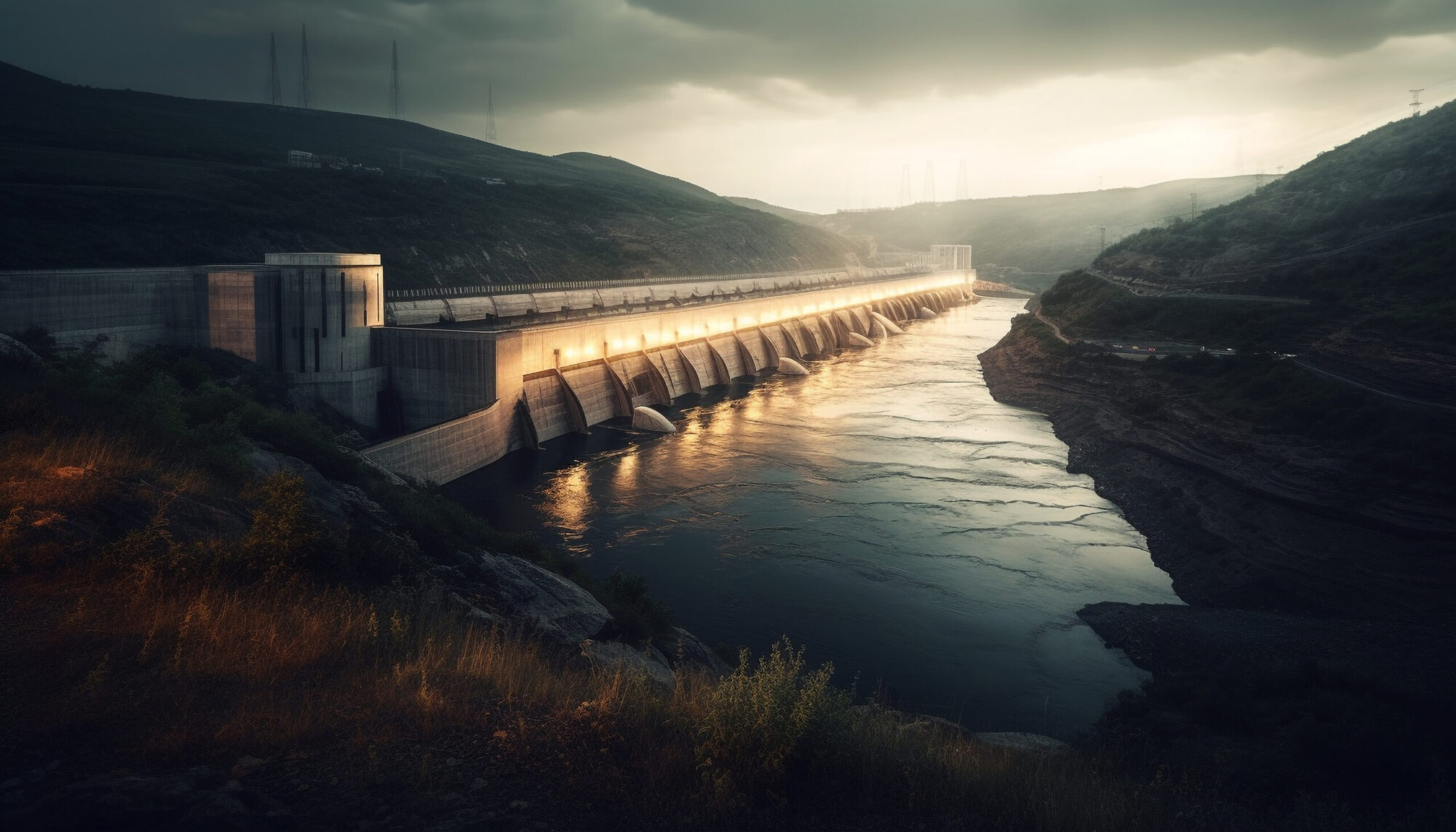
1. Introduction: The Most Precious Commodity 💧
In the arid landscapes of the Middle East and North Africa (MENA), water is more valuable than oil. With growing populations and increasing water scarcity, the region is investing billions into water technology, particularly desalination. For savvy investors, this critical sector offers a unique and socially impactful way to generate long-term passive income.
2. The MENA Water Crisis: A Generational Challenge
Countries in the Gulf Cooperation Council (GCC) are among the most water-scarce in the world. They rely heavily on desalination—the process of removing salt from seawater to make it drinkable—to support their cities, industries, and agriculture. This is not a cyclical trend; it’s a fundamental necessity for survival and growth.
3. How Desalination Works: A Quick Overview
The most common method today is Reverse Osmosis (RO). This process uses high-pressure pumps to force seawater through a semi-permeable membrane, leaving the salt behind. It’s an energy-intensive process, but continuous innovation is making it more efficient.
4. Investment Avenue 1: Publicly Traded Utility Companies
Many of the massive desalination plants in the MENA region are operated by large, publicly traded utility companies. A prime example is ACWA Power (listed on the Saudi Exchange, Tadawul). By purchasing shares in these companies, you gain exposure to their long-term government contracts and stable revenue streams, often receiving consistent dividends.
5. Investment Avenue 2: Water Technology & Equipment Suppliers
You don’t have to invest in the plants themselves. You can invest in the global companies that supply the critical technology—the pumps, membranes, and monitoring systems. Companies like Veolia (France) or Xylem (USA) have a massive presence in the MENA region and are direct beneficiaries of its spending on water infrastructure.
6. The Rise of Solar-Powered Desalination
A major criticism of desalination has been its high energy consumption. The game-changer is the falling cost of solar power. The MENA region has abundant sunshine, and new projects are increasingly integrating large-scale solar farms to power their desalination plants, reducing costs and environmental impact. This makes the business model even more sustainable.
7. Understanding Public-Private Partnerships (PPPs)
Most large-scale water projects in MENA are structured as PPPs. A government (like the UAE or Saudi Arabia) will grant a long-term contract (e.g., 25 years) to a private consortium to build and operate a plant. This consortium then sells the desalinated water back to the state utility at a pre-agreed price, ensuring highly predictable, long-term cash flows for its investors.
8. How to Access These Investments
For international investors, the easiest way to gain exposure is through:
- ETFs: Global Water ETFs (like PIO or FIW) hold a basket of companies involved in the water industry worldwide, many of which have significant MENA operations.
- International Brokerages: Many brokers now offer access to major exchanges like the Tadawul (Saudi Arabia) or the Dubai Financial Market.
- ADRs/GDRs: Some MENA companies may be listed on the London or New York stock exchanges as American or Global Depository Receipts.
9. Risks to Consider: Regulatory and Political
While the demand for water is certain, these are large-scale infrastructure projects subject to government policy. Regulatory changes, political instability in the wider region, or shifts in government spending priorities could impact project timelines and profitability.
10. Beyond Desalination: Wastewater Treatment and Smart Irrigation
The water story doesn’t end with desalination. There is also heavy investment in advanced wastewater treatment to recycle water for agricultural and industrial use, as well as smart irrigation technology to reduce water consumption in farming. Companies active in these sub-sectors also present compelling investment opportunities.
11. The Socially Responsible Investing (SRI) Angle
Investing in water technology in a water-scarce region is a powerful example of an investment that can deliver both financial returns and positive social impact. You are providing capital to solve one of the most pressing humanitarian and environmental challenges of our time.
12. Final Thoughts: A Bet on a Fundamental Need
Investing in MENA’s water sector is not about chasing fleeting trends. It’s a long-term investment in a fundamental, non-negotiable human need. The combination of government-backed contracts, technological innovation, and demographic necessity creates a compelling and durable case for generating passive income from the region’s “liquid gold.”